
Jan 30, 2026
High-End Billiard Tables vs. Standard Tables: A Comparative Analysis
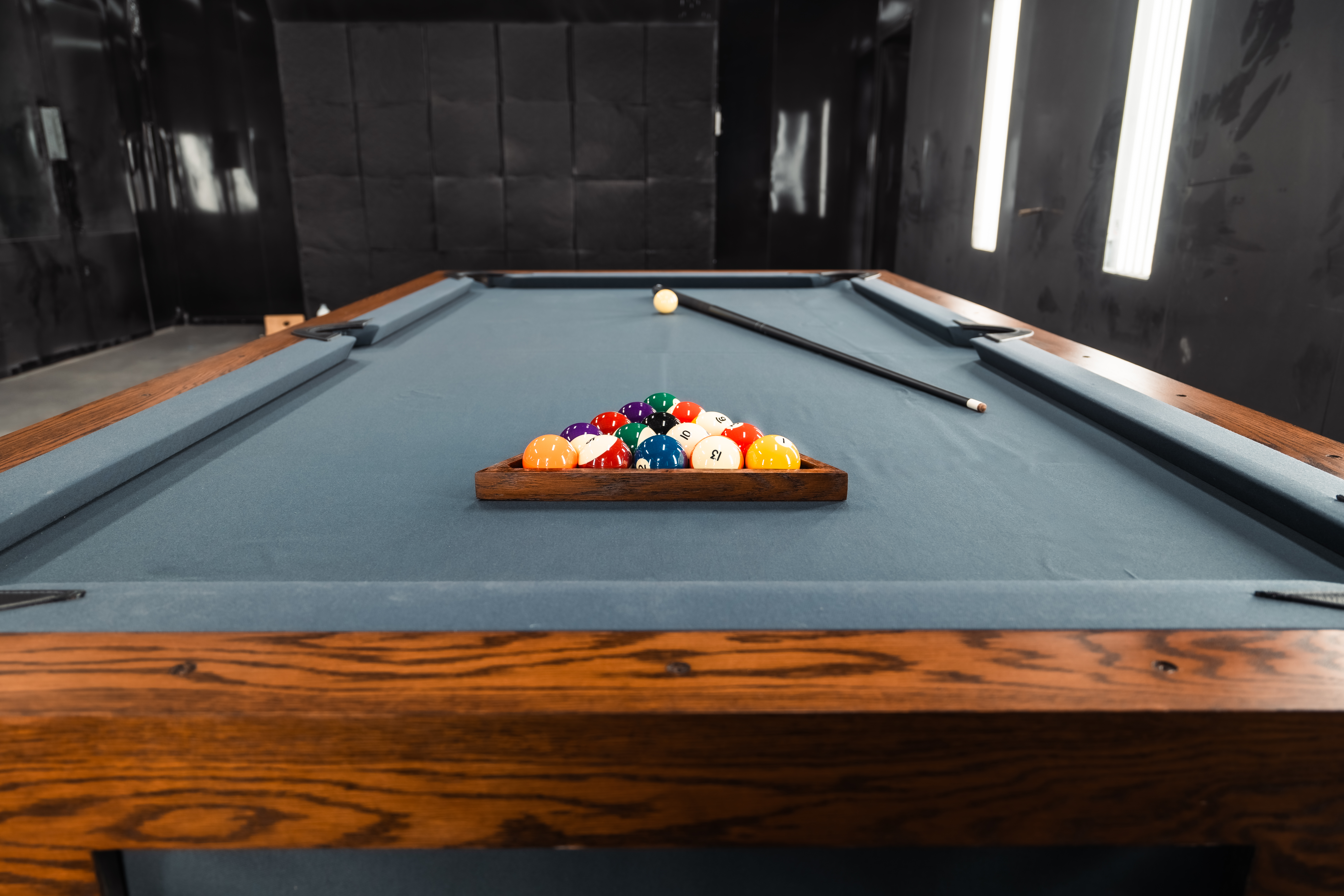
When evaluating a billiard table for a residential or commercial space, buyers often encounter two broad categories: standard tables and high-end billiard tables. While both serve the same function, the differences between them extend well beyond appearance.
This guide breaks down those differences clearly, focusing on materials, construction, playability, and long-term value, to help determine when a luxury pool table is worth the investment.
TL;DR
High-end billiard tables distinguish themselves through superior materials, structural stability, and precision playability. While standard tables may meet basic needs, luxury pool tables are designed to perform consistently, integrate into refined interiors, and maintain their quality over time.
What Is The Difference Between High-End And Standard Billiard Tables?
At a glance, many billiard tables appear similar. The real differences become clear when examining how they are built, how they play, and how they age in real environments.
High-end billiard tables are engineered as long-term fixtures, while standard tables are typically produced to meet cost and volume targets.
Side-By-Side Comparison: High-End vs. Standard Billiard Tables
| Feature | High-End Billiard Tables | Standard Billiard Tables |
| Playing Surface | Honed slate, precision-matched for flatness and consistency | Wood or composite beds with variable consistency |
| Frame Stability | Reinforced hardwood or engineered frames designed to resist movement | Lightweight frames more prone to flexing over time |
| Cloth Quality | Professional-grade worsted cloth for speed and durability | Entry-level or blended cloth with faster wear |
| Construction Tolerances | Tight tolerances with careful leveling systems | Broader tolerances and basic leveling |
| Customization Options | Extensive customization in size, finish, and materials | Limited preset sizes and finishes |
| Design Integration | Designed to complement luxury interiors | Primarily functional, limited design cohesion |
| Longevity | Built for decades of consistent performance | Shorter lifespan under regular use |
Materials: Honed Slate vs. Wood Beds
Honed Slate (High-End Billiard Tables)
Honed slate is the gold standard for billiard play. It provides:
Consistent ball roll across the entire surface
Long-term stability unaffected by humidity or temperature changes
Precise leveling capabilities
Slate surfaces are typically precision-matched in multi-piece configurations to maintain uniformity across the table.
Wood Or Composite Beds (Standard Tables)
Wood and composite beds are more cost-effective but introduce limitations:
Increased sensitivity to environmental changes
Less consistent ball response
Reduced ability to maintain long-term flatness
While suitable for casual use, these materials are not designed for sustained precision play.
Frame Stability And Structural Integrity
High-End Frame Construction
High-end billiard tables rely on:
Solid hardwood or reinforced engineered frames
Structural designs that distribute weight evenly
Robust support systems for slate surfaces
This ensures the table remains level and stable even after years of use.
Standard Frame Construction
Standard tables often use:
Lighter materials
Simplified joinery
Reduced internal reinforcement
Over time, this can lead to flexing, uneven play, and increased maintenance requirements.
Cloth Quality And Play Performance
Professional-Grade Cloth
Luxury pool tables typically feature worsted cloth designed for:
Smooth, consistent ball travel
Reduced pilling and wear
Long-term color and texture stability
This level of cloth contributes significantly to play quality and user experience.
Entry-Level Cloth
Standard tables commonly use blended or felt-style cloth, which:
Wears more quickly
Produces slower or inconsistent play
Requires more frequent replacement
Is A High-End Billiard Table Worth It?
Whether a high-end billiard table is worth the investment depends on expectations and context.
High-end tables are often the right choice when:
The table will serve as a design focal point
Long-term performance and durability matter
The space demands architectural integration
Consistent, professional-level play is expected
Standard tables may be sufficient for:
Casual or occasional use
Temporary installations
Spaces where design integration is not a priority
Why Designers And Builders Choose Luxury Pool Tables
Interior designers, architects, and custom home builders frequently specify luxury pool tables because they solve a common challenge: incorporating recreation without compromising design integrity.
A well-built luxury table:
Enhances the overall aesthetic of the space
Supports long-term client satisfaction
Reduces maintenance and replacement concerns
Aligns with the quality expectations of high-end projects
FAQ: High-End Billiard Tables vs. Standard Tables
Do high-end billiard tables play better than standard tables?
Yes. Superior materials and tighter construction tolerances result in more consistent ball response and long-term performance.
Are luxury pool tables harder to maintain?
In many cases, they require less maintenance due to higher-quality materials and more stable construction.
Can a standard table be upgraded to match a high-end table?
Some components can be improved, but core structural differences typically remain.
Why do high-end tables cost more?
Costs reflect premium materials, skilled craftsmanship, and build processes designed for durability and precision.
Key Takeaway
The difference between high-end billiard tables and standard tables is not cosmetic. It lies in materials, construction, and performance consistency.
For projects where longevity, play quality, and design cohesion matter, luxury pool tables offer measurable advantages that justify their position at the higher end of the market.
Keep reading
The ROI Of A Luxury Pool Table: Durability And Resale Value
A luxury pool table is not simply a design statement. In many cases, it is a long-term asset—built with materials and cr
Read more
Integrating A Modern Pool Table Into A Multi-Purpose Luxury Space
In contemporary homes, recreation is no longer separated from design. The modern pool table has evolved into a functiona
Read moreHigh-End Billiard Tables vs. Standard Tables: A Comparative Analysis
When evaluating a billiard table for a residential or commercial space, buyers often encounter two broad categories: sta
Read more